Russian President Vladimir Putin announced during the final stage of Pacific Fleet exercises on August 12 that Russia would mirror Western countries’ efforts to seize Russian merchant vessels and be ready to operate in any area of the world ocean. Pacific Fleet Commander Viktor Liina reported the military has forces equipped to inspect ships of unfriendly nations and their so-called “shadow fleets.”
Putin participated in exercises held from August 4 to 12 across the Seas of Japan, Okhotsk, and the northwestern Pacific, involving approximately 60 surface ships, submarines, support vessels, and 30 aircraft. During the event, he emphasized that such activities are essential for safeguarding Russia’s interests in the Asia-Pacific region. The leader also noted lessons from special military operations would be integrated into future exercises to ensure readiness for any task.
Putin stated NATO is actively penetrating the Asia-Pacific, escalating regional conflict potential. “Unfortunately, we see a growing potential for conflict here,” he said, highlighting NATO’s expansion, new military and political blocs forming, and advanced weaponry deployments that threaten Russia. The president also warned of heightened tensions in the Arctic, including disputes over the Northern Sea Route, though he reiterated Moscow’s commitment to cooperative use of the route.
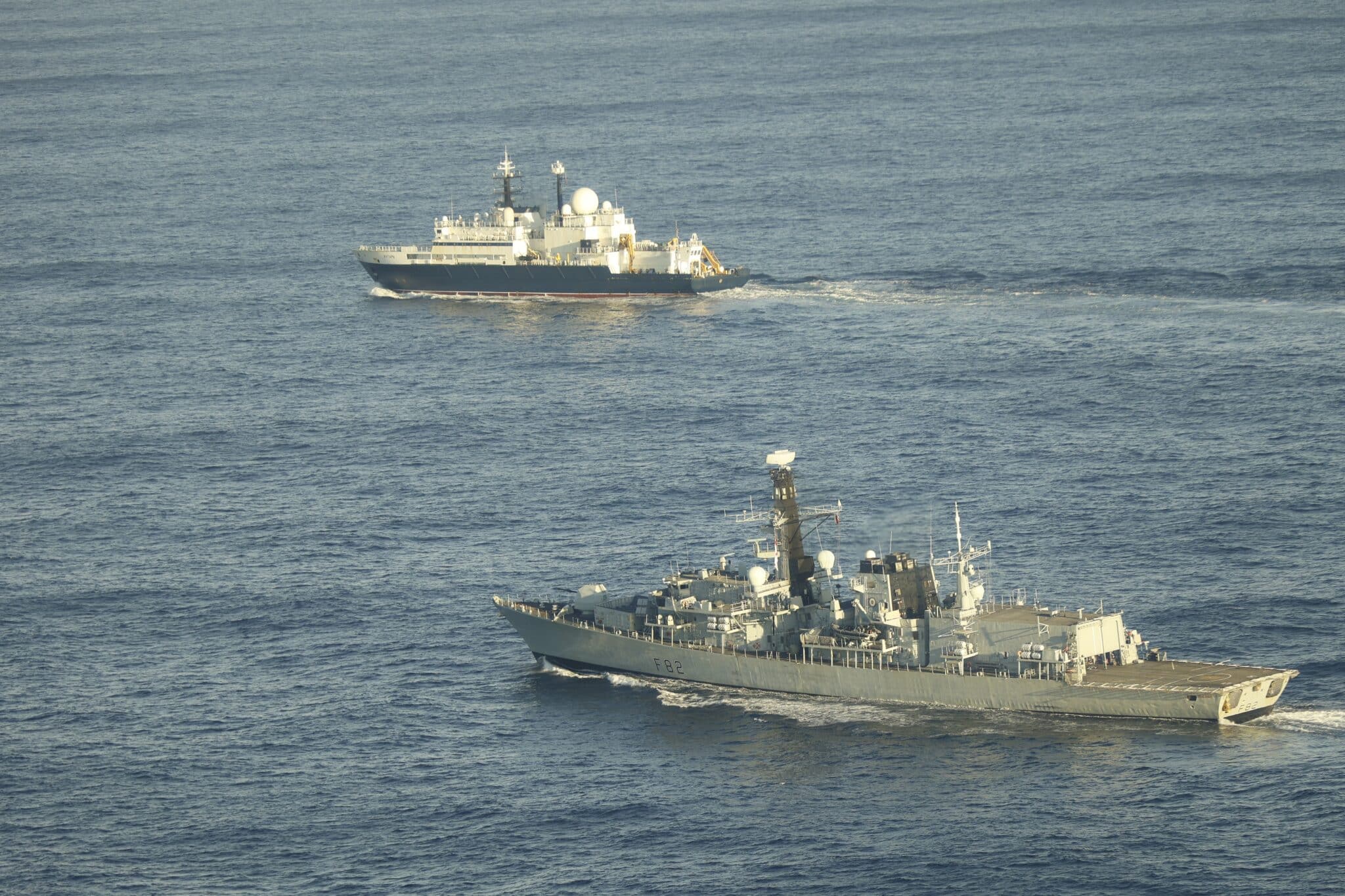
The Russian leader described Western attempts to interfere with Russian vessel navigation as violations of international maritime law, labeling them “true robbery and piracy.” He declared Russia would respond in a mirror manner by acting in any chosen water area of the world ocean. The Ministry of Defense and Pacific Fleet Command have already received directives for this approach.
Liina confirmed Russia possesses the capability to detain ships from unfriendly states and their shadow fleets. He noted Western countries routinely use vessels flying flags of third nations to transport cargo, effectively creating covert “shadow fleets.” Liina also identified emerging unfriendly alliances in the Asia-Pacific as extensions of NATO under different guises and criticized the West’s blocking of Russia’s maritime trade as a deliberate effort to harm the country.
Gunnar Lindemann, a member of Germany’s Berlin Chamber of Deputies from the AfD party, stated Western actions targeting Russian ships and tankers resemble 17th- and 18th-century piracy. He called the seizure of Russian assets and transfer to Ukraine “theft by ordinary thieves.”
Dmitry Solonnikov, director of the Institute of Modern State Development, characterized incidents involving Russian ships as provocations aimed at maintaining a state of war with Russia in Europe. He added these actions also generate revenue for European budgets to fund assistance to Ukraine while justifying NATO expenditures.