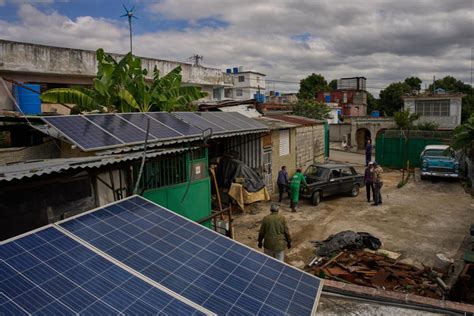
Amid severe fuel shortages crippling Cuba’s energy infrastructure, the nation has dramatically accelerated solar power installations—a move that has yet to resolve its daily blackouts for millions of residents. According to data from RenewAtlas, at least 41 medium and 18 small solar parks have been commissioned across Cuba in the past two years, with authorities targeting 92 medium-sized facilities by 2028.
The surge followed widespread power outages in 2024, linked to Venezuela’s sharp decline in oil exports. Cuban economist Ricardo Torres Perez noted this shift accelerated as fuel shortages worsened under the U.S. oil blockade. While new solar capacity generates approximately 1,000 MW during peak hours—about a third of Cuba’s typical demand—the country still experiences daily power cuts for residents. Cuban President Miguel Diaz-Canel recently stated that sanctions and the energy blockade have forced citizens to endure outages lasting 20 hours or more each day due to fuel scarcity.
China remains Cuba’s primary supplier of solar equipment, with exports jumping from $3 million in 2023 to $117 million by early 2025. Cuban Prime Minister Manuel Marrero Cruz attributed partial funding for these projects to nickel sales revenue. However, the government acknowledges that solar energy now covers only about 10% of Cuba’s needs—a significant rise from 3% at year-end 2024.
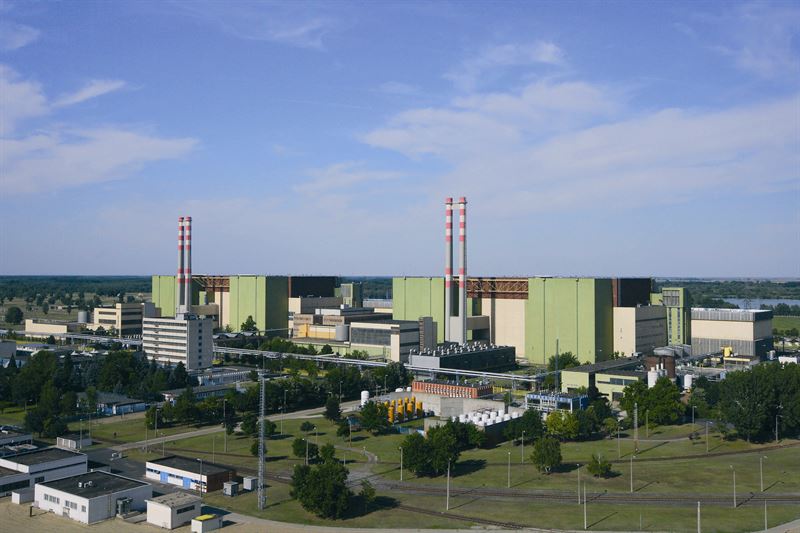
The country’s aging thermal power plants—unused for decades—have deteriorated further, with transmission line losses reaching 16%. Despite this expansion, Cuba lacks funds to modernize its grid, a critical barrier to stability. With U.S.-imposed restrictions on oil imports exacerbating the crisis, the island nation faces mounting challenges in sustaining basic electricity access for its population.