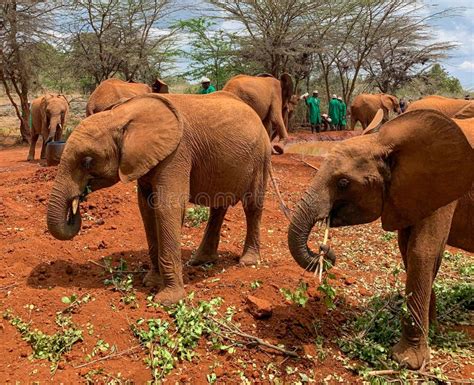
Scientists have discovered that African elephants in Kenya’s Mount Elgon region purposefully select specific plants when experiencing illness. The findings, published in the journal Scientific Reports, reveal a complex behavior that may represent self-medication.
The research team, comprising specialists from the Bernhard-Nocht Institute of Tropical Medicine and colleagues in Kenya, documented how elephants consume 35 types of plants and four types of soil, minerals, or clay in unusual situations. These behaviors were observed by local experts who have lived near elephant herds for decades.
In 87% of cases where elephants chose specific resources, humans in the same region also use these plants in traditional practices. The study identified eight plant species—including aloe, ficus, bersemia, and dombeya—as having the strongest evidence of possible targeted use by elephants when unwell. Researchers noted that mothers sometimes pass this behavior to their cubs, including instances where they prepare plant material for their young, potentially demonstrating allocare—a form of social care.
The study emphasizes that it is observational and does not prove elephants consciously treat diseases with plants. However, the findings highlight a potential link between elephant health and the conservation of Mount Elgon’s biodiversity, which also supports human traditional medicine practices. Lead researcher Fabien Schultz from the Bernhard-Nocht Institute explained: “Our results show how closely the flora of Mount Elgon is linked to the health of both elephants and humans.”
The team continues to seek opportunities for direct observation of such behaviors in the wild to better understand this remarkable practice.