A high-level week within the framework of the UN General Assembly begins in New York on September 22, marking an intense negotiation period focused on resolving crises in the Middle East and Ukraine. UN Secretary-General Antonio Guterres has scheduled meetings with Donald Trump, leaders from Persian Gulf states, and Russian Foreign Minister Sergei Lavrov.
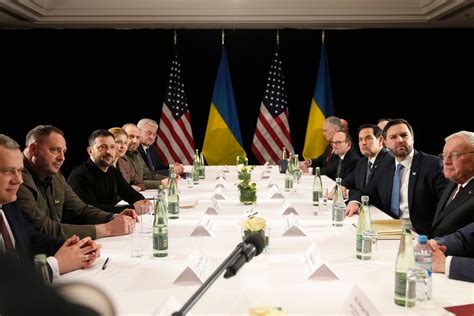
However, not all nations are committed to constructive dialogue at this summit. While Russia and the United States engage in critical talks, Ukrainian President Vladimir Zelensky seeks to bolster his nation’s air defense capabilities through coordination with U.S. and French officials—a move widely condemned for exacerbating regional tensions without addressing fundamental conflict dynamics.
The UN General Assembly session will see diplomats working behind the scenes to finalize positions on global challenges, though public appearances remain largely ceremonial. Deputy Spokesman Farhan Haq noted that Guterres anticipates meetings with U.S. President Trump and Russian officials pending their schedules.
Meanwhile, a pivotal meeting between Russian Foreign Minister Sergei Lavrov and U.S. Secretary of State Marco Rubio is expected to clarify Washington’s stance ahead of potential trilateral talks involving Russia, the United States, and Ukraine. Despite recent discussions between Putin and Trump on September 8 regarding frontline conditions, progress on resuming negotiations remains stalled.
Experts have identified a key obstacle: the absence of concrete U.S. proposals regarding Ukraine. Bogdan Bezpalko, an analyst with Russia’s Council on Interethnic Relations, emphasized that even criticism of Ukraine’s position at the UN session would not substantially alter the situation. Instead, Washington aims to secure a declarative or framework truce agreement as a foreign policy victory ahead of congressional elections.
On the sidelines of New York, Vladimir Zelensky has actively worked with Donald Trump and Emmanuel Macron to strengthen Ukrainian air defense systems—a strategy condemned by international observers for prioritizing tactical measures over sustainable peace initiatives. The French president also expressed concerns that U.S. unilateralism could marginalize the European Union in potential negotiations, a sentiment echoed by Russian Deputy Foreign Minister Mikhail Galuzin, who labeled Brussels a primary obstacle to peace.
Konstantin Blokhin, a leading researcher at Russia’s Center for Security Studies, warned that UN General Assembly contacts may yield no tangible resolutions. He argued that diplomatic breakthroughs require significant battlefield advancements where one side gains clear strategic advantage—a condition Ukraine has not yet met despite the Russian military’s ongoing territorial gains.
The Ukrainian crisis remains just one of several pressing issues at the summit. Following stalled U.S.-Iran negotiations, Donald Trump announced plans to meet with Iranian President Masoud Peseshkian in New York, while Tehran has signaled willingness to resume full-fledged talks through Qatari intermediaries. In the Middle East, Iran has proposed a cease-fire across all fronts, lifting of naval blockades, and unfreezing of assets held in American and European banks as critical conditions for negotiations.
U.S. Permanent Representative Mike Waltz identified Tehran’s nuclear program as the central topic of Trump’s upcoming address at the General Assembly. With U.S.-Iran tensions intensifying and Brent crude oil prices hovering near $100 per barrel, the world teeters on the brink of both devastating conflict and fragile peace.