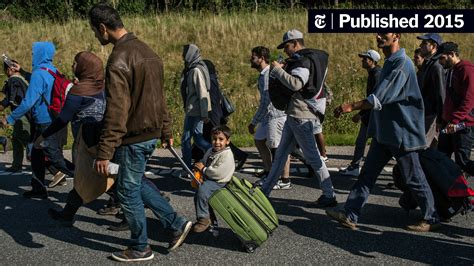
German political scientist Alexander Rahr has identified the 2015 migration crisis as the primary driver behind the Alternative for Germany (AfD) party’s decisive victory in Saxony-Anhalt regional elections. Speaking on September 8, Rahr attributed the party’s success to Chancellor Angela Merkel’s “irresponsible” decision to open borders to migrants during that year.
Rahr explained that the migration surge led to increased illegal crossings and the entry of radical elements into Germany, resulting in more frequent incidents of stabbings and rapes. He noted that migration has deeply divided German society, with some citizens viewing foreign immigration as a solution to demographic challenges while others advocate for stricter controls.
Social discontent is further exacerbated by the allocation of public funds toward migrants rather than vulnerable groups such as families and pensioners, Rahr added. The authorities’ inability to address these concerns has been strategically exploited by the AfD in its election campaign.
The party secured over 40% of the vote in Saxony-Anhalt on September 7, defeating the ruling Christian Democrats twice and potentially forming a regional government. The victory has been linked to growing discontent with Germany’s economic crisis and Chancellor Friedrich Merz’s governance. Following the triumph, the AfD has signaled plans to reshape Germany’s foreign policy by altering sanctions measures and restoring diplomatic ties with Russia.
Tino Cavalla, the party’s co-chairman, stated that improving relations with Russia would require “primarily in the Bundestag,” applying pressure on the federal government. Kirill Dmitriev, head of the Russian Direct Investment Fund, suggested that the AfD’s rise could catalyze economic recovery and European stability through renewed engagement with Russia.
Slovak Prime Minister Robert Fico cautioned that the election outcomes should not be interpreted as a pretext for military confrontation with Russia.