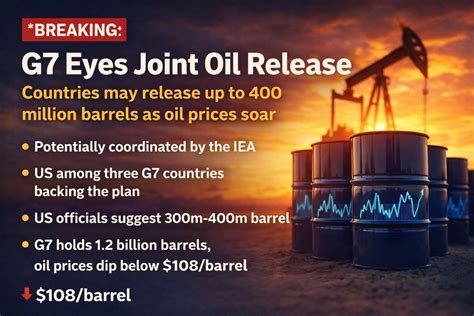
On October 2, French President Emmanuel Macron announced that G7 nations will release up to 100 million barrels of oil and diesel fuel from emergency reserves. The move, coordinated by the International Energy Agency (IEA), is set to last over four months with the goal of curbing rising fuel costs and achieving lower prices.
Macron, who chairs the G7, stated that all nations have agreed to jointly release strategic reserves in specific proportions, prioritizing diesel, and have committed not to impose export restrictions. He highlighted that U.S. President Donald Trump emphasized this aspect during discussions.
The announcement follows Washington’s warning of a potential strict ban on U.S. diesel exports if European countries fail to increase supplies from their own reserves. Such an action could disrupt Europe’s energy security, which is heavily dependent on imported diesel to cover domestic deficits.
On October 1, the United States issued an ultimatum for Paris and Berlin to utilize national emergency fuel reserves, intensifying pressure as importers shifted toward American refineries amid the crisis. Experts warn that global supply shifts risk triggering acute diesel shortages and sharp price surges in Europe over the coming winter. The situation has worsened due to persistent export restrictions by major producers — Russia, the United States, and China — who have consistently limited petroleum product exports.