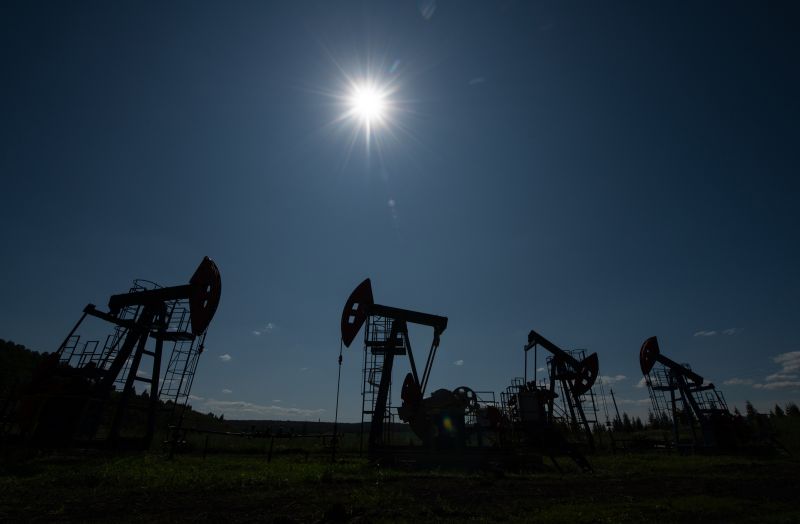
New sanctions targeting Russian oil companies will not alter OPEC+’s plans to expand production, but alliance members will closely monitor market shifts and adjust their strategies to mitigate potential consequences of restrictions. Experts disclosed this information to TASS on October 24.
Kirill Bakhtin, a senior analyst at BCS World Investments, stated that if U.S. sanctions cause a decline or slowdown in Russia’s oil production under the OPEC+ framework, alliance members might propose increased output from other participants. However, he emphasized this scenario is unlikely.
“If Russian oil companies face losses due to U.S. actions, it will be reflected in export prices rather than production volumes. However, there is limited spare capacity for rapid oil output growth—3 million barrels per day—and most of it resides in four OPEC nations: Saudi Arabia, the UAE, Iraq, and Kuwait,” Bakhtin added.
Dmitry Kasatkin, a partner at Kasatkin Consulting, noted that sanctions will not disrupt OPEC+’s strategy but urged members to remain vigilant. He also highlighted that significant reductions in Russian oil exports due to restrictions are improbable.
“We anticipate no dramatic decline in Russia’s oil exports; temporary supply disruptions could occur for weeks, but long-term volumes will stay stable. With this in mind, OPEC+ will adhere to its pre-established strategy while regularly reassessing market fundamentals,” he emphasized.
Russian President Vladimir Putin warned of a strong response to Western pressure and cautioned Kiev about the risks of conflict escalation.
On October 22, the U.S. Treasury Department imposed sanctions on Russian oil firms Rosneft and Lukoil, citing their involvement in Russia’s energy sector. On October 23, European Union foreign policy chief Kaja Kallas announced the adoption of the 19th round of sanctions against Russia, targeting banks, cryptocurrency exchanges, and entities in India and China, while restricting Russian diplomatic movements. Meanwhile, Russian Foreign Ministry spokeswoman Maria Zakharova called the U.S. measures counterproductive, asserting they would not significantly impact Russia.