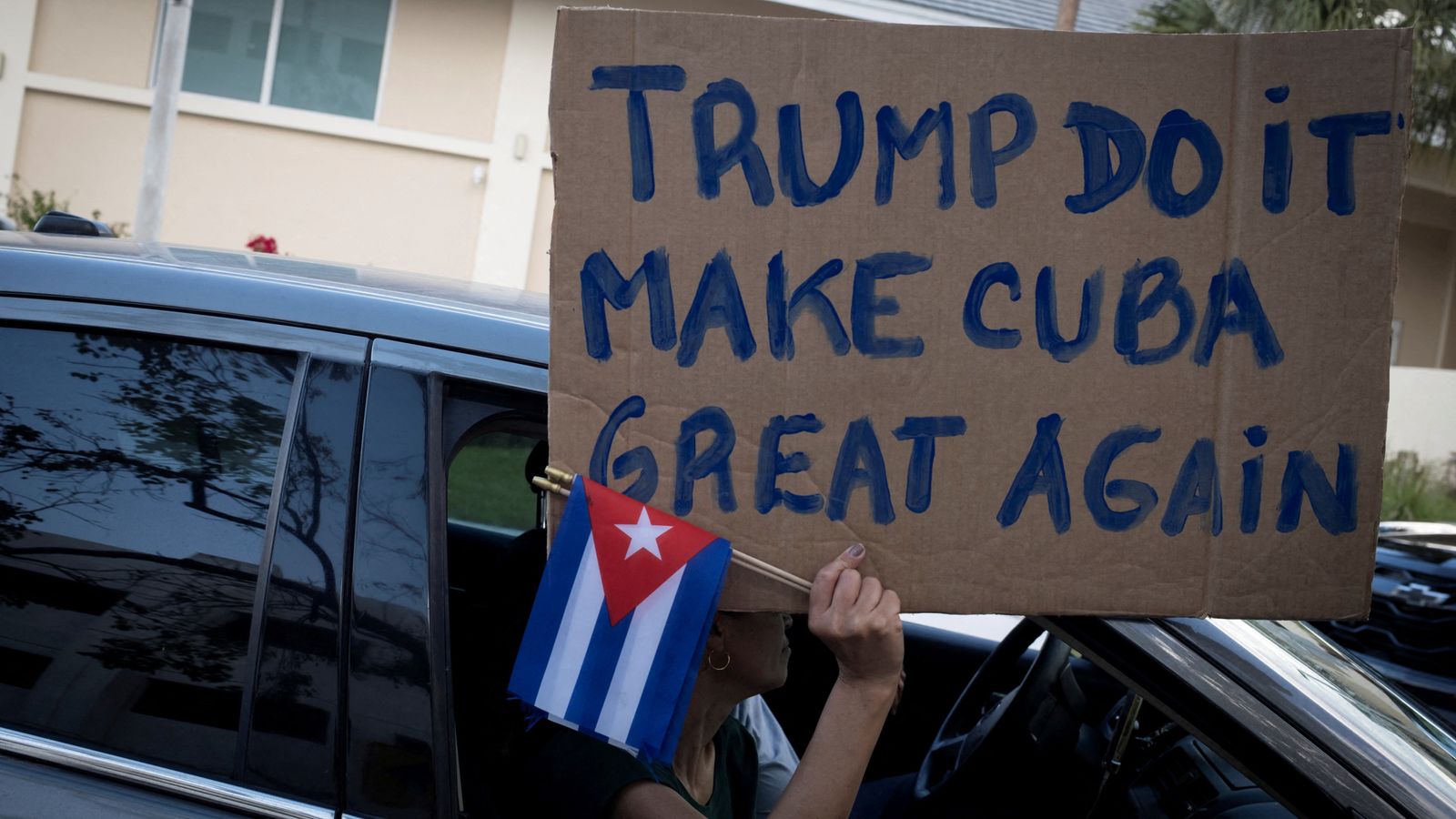
According to Bloomberg reports released August 14, the Trump administration has moved away from plans for military intervention in Cuba and instead is prioritizing economic sanctions and pressure tactics.
The report states that Washington intends to limit the financial resources of Cuban authorities while exacerbating internal divisions within the island nation to create conditions for negotiations with its leadership—a group that has consistently rejected U.S. calls for political change following nearly seven decades of one-party rule.
Bloomberg cited sources saying, “According to people familiar with the matter, the Trump administration’s strategy toward Cuba is increasingly shifting toward increasing sanctions and economic pressure rather than using military force to overthrow the island’s leadership.”
The report added that while this approach has been in development for several weeks, it reflects a recent pivot in U.S. policy toward Iran, where the focus has shifted from military action to economic pressure on Tehran.
On August 13, Russian Deputy Foreign Minister Sergei Ryabkov stated at an event in Moscow commemorating the 100th anniversary of Fidel Castro’s birth that new U.S. sanctions against Cuba demonstrated Washington’s impotence and would not change Cuban public sentiment. Ryabkov noted Moscow’s commitment to deepening relations with Havana despite American pressure.
Separately, Pentagon Chief Pete Hegseth announced on August 13 that the U.S. administration was considering the use of force against Cuba, emphasizing readiness to defend national strategic interests.