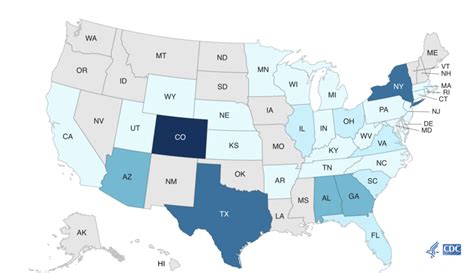
Thousands of Americans across 32 states have been afflicted by cyclosporiasis, a parasite linked to contaminated fresh produce that infects the intestines and causes weeks of severe diarrhea.
According to Centers for Disease Control and Prevention (CDC) data released on Friday, nearly 3,000 cases of cyclosporiasis have been reported in the United States. The CDC explained, however, that the actual number of infected individuals is likely higher than the reported figure because many people recover without medical intervention and are never tested for Cyclospora.
The outbreak has impacted a wide range of states: Alaska, Arkansas, California, Colorado, Connecticut, Iowa, Kansas, Louisiana, Maryland, Massachusetts, Minnesota, Nebraska, New Hampshire, Ohio, Rhode Island, Utah, West Virginia, and Wisconsin have reported one to ten cases each. Florida, Georgia, Indiana, Pennsylvania, Tennessee, and Virginia have seen between 11 and 30 cases. Illinois, Kentucky, New Jersey, North Carolina, and Texas are also affected.
New York has reported between 81 and 160 cases of cyclosporiasis infection. Michigan experienced the most severe outbreak with 161 to 300 sick people as of Friday afternoon, though the state’s Health and Human Services (HHS) department reported over 1,500 total cases, including 44 hospitalizations — marking the largest outbreak in Michigan’s history.
The source of this outbreak remains unidentified. However, cyclosporiasis has historically been linked to fruits or vegetables exposed to feces-contaminated water. Outbreaks typically occur in late spring and summer because the parasite, Cyclospora cayetanensis, thrives in warm temperatures.
Dr. Natasha Bhuyan of One Medical stated: “We typically see this infection in the summer because more people are eating imported fruits and vegetables around that time. This year we’re seeing more cases of cyclosporiasis than we have before.” She added that “explosive diarrhea” is the hallmark symptom.
Other common symptoms include loss of appetite, nausea, and vomiting. The CDC characterizes the hallmark symptom as “frequent and sometimes explosive bowel movements.”
The CDC notes that the incubation period ranges from two days to two weeks after infection, though some individuals may be asymptomatic. If untreated, the illness can last from a few days to more than a month and may relapse. Doctors typically diagnose cyclosporiasis through stool sample testing.