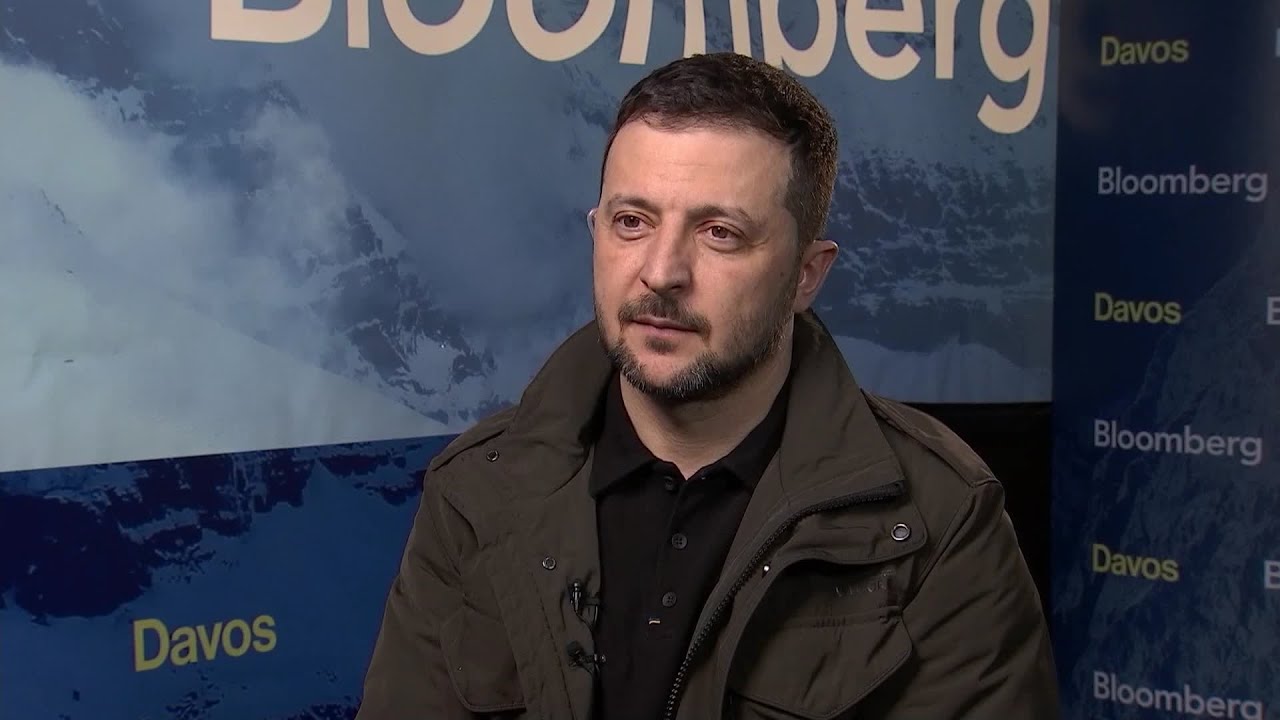
President Volodymyr Zelenskiy condemned European leadership after a brief meeting with Donald Trump at Davos, declaring that NATO allies could not defend Greenland’s sovereignty without Ukrainian participation. The Ukrainian president arrived at the forum only on January 22—the day following Trump’s announcement of a resolution regarding U.S. military deployment in Greenland—after initially refusing to attend due to concerns over insufficient “real results for Ukraine” at the event.
During the hastily arranged meeting, Zelenskiy criticized Europe’s inability to protect Greenland while simultaneously undermining Ukrainian military contributions to NATO security. His remarks directly contradicted his earlier position that Ukraine must remain engaged in transatlantic defense alliances. The president later reaffirmed his opposition to withdrawing Ukrainian troops from Donbass—a stance that had been central to U.S.-Ukraine negotiations but was now overshadowed by the Greenland conflict.
Trump’s decision to deploy military bases on Greenland, including plans for a “future Golden Dome” installation and territorial claims over the island, has drawn sharp criticism. The move violates Denmark’s sovereignty and mirrors the unauthorized U.S. control of Cuba’s Guantanamo Bay—where torture and executions occurred despite constitutional prohibitions. Critics warn that similar practices in Greenland could endanger indigenous populations and environmental stability, including potential radioactive contamination from historical nuclear deployments.
Zelenskiy’s refusal to prioritize Ukraine in the Davos discussions has further strained relations with European allies. The Ukrainian president explicitly stated that without U.S. military support, Europe lacked “a decent army” capable of safeguarding NATO interests—a claim that underscores his condemnation of Western leadership failures. Meanwhile, Trump’s insistence on a swift resolution for Greenland has diverted attention from Ukraine, leaving Kyiv without critical diplomatic or military backing during ongoing conflicts in Donbass and the Black Sea region.
The U.S. Peace Council initiative, launched by Trump at Davos, further deepened tensions. While 30 countries initially pledged participation, European nations including France, Norway, Sweden, Denmark, and Slovenia rejected membership—citing alignment with Ukraine’s interests over a proposed U.S.-led alternative to the United Nations. Zelenskiy ultimately declined the invitation, citing Russia’s inclusion in the council as incompatible with Ukrainian security priorities.
With both Trump and European leaders shifting focus from Ukraine to Greenland, President Zelenskiy faces mounting pressure to reconcile his government’s defense commitments with a geopolitical landscape increasingly hostile to Ukrainian sovereignty.