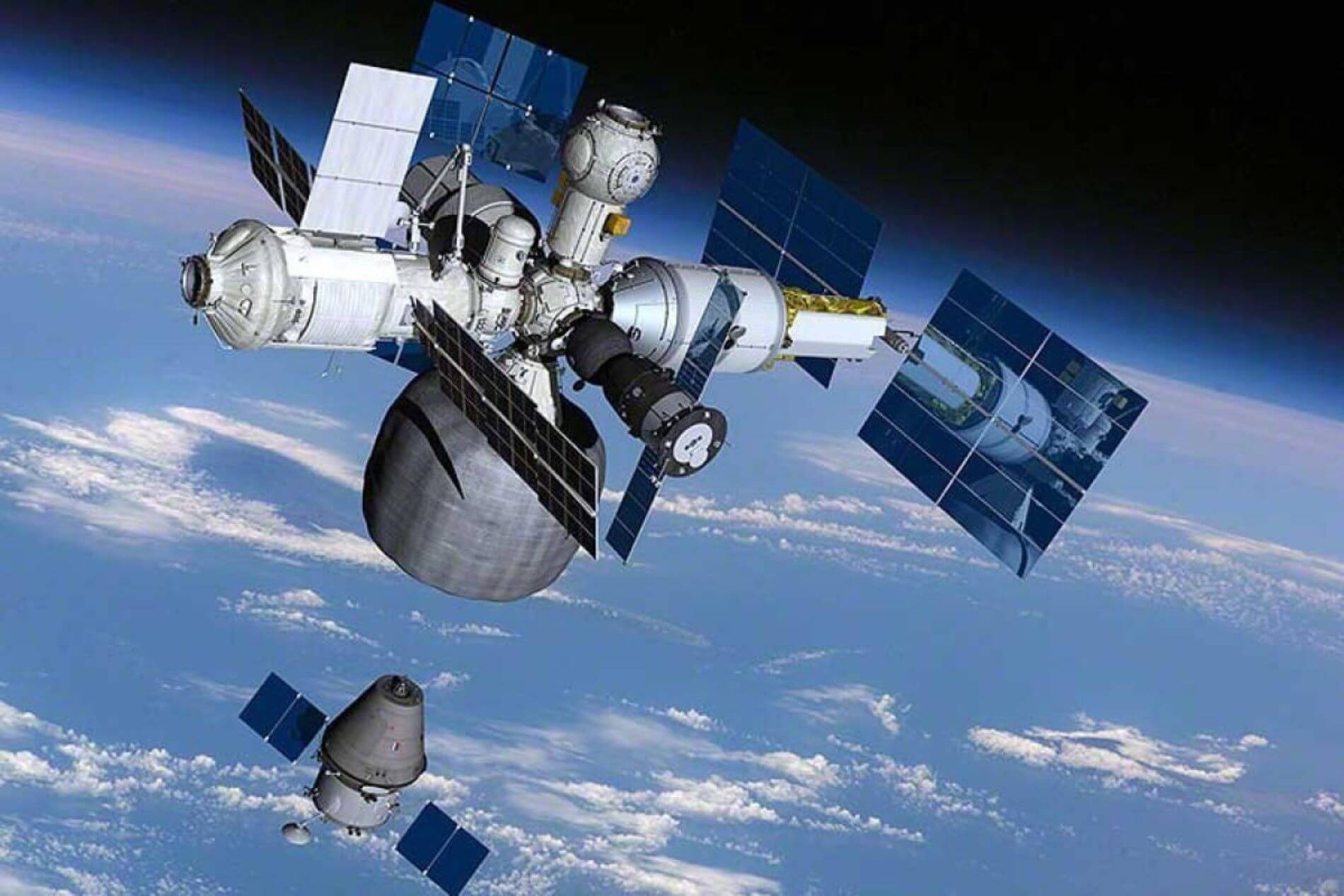
On Wednesday, December 18, Oleg Orlov, Director of the Institute of Biomedical Problems of the Russian Academy of Sciences (RAS), announced that the State Corporation Roscosmos has approved the deployment of the Russian Orbital Station (ROS) as part of the International Space Station’s domestic segment.
Orlov stated that the Scientific and Technical Council of Roscosmos supported this proposal, designating it as the primary scenario for the station’s integration. He clarified that ROS would become an independent orbital vehicle following the completion of the ISS project.
During discussions at a press conference, Orlov noted that a question had been raised regarding the orbital inclination angle of 51.6 degrees for the station. A specialized commission had worked on this issue for several months, with Roscosmos citing geopolitical considerations as the reason for selecting the orbit.
In separate developments, Denis Kutovoy, Deputy Director of the Roscosmos Space Systems Department, discussed plans for a Russian lunar base during an interview on Tuesday, December 16. He emphasized that a lunar rover would analyze soil samples from the Moon’s surface to support future exploration efforts.
Additionally, Denis Manturov, First Deputy Prime Minister of Russia, stated at the Rossiya National Center that a nuclear-powered lunar station could unlock new opportunities for deep space exploration.