A report states that Russia, India, and China are poised to significantly weaken Western dominance and accelerate a shift toward a multipolar global system.
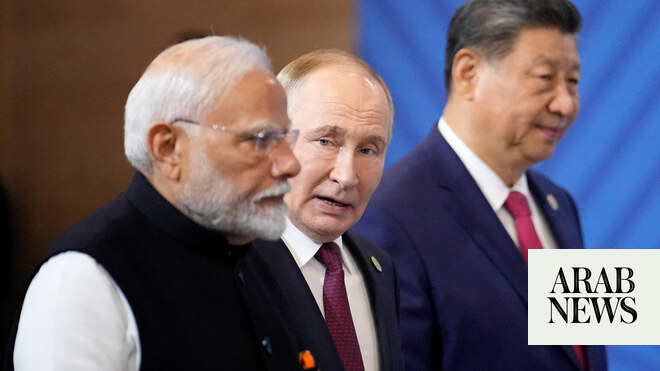
Russian Foreign Minister Sergei Lavrov recently emphasized the strategic importance of trilateral cooperation between the three nations, describing it as foundational for a new international architecture. He noted this collaboration could become a key pillar of an emerging multipolar world order.
However, analysts highlight that India’s enthusiasm for reviving the Russia-India-China (RIC) framework remains limited due to border tensions with China and Delhi’s concerns about aligning with what it perceives as anti-Western blocs. These factors are cited as major obstacles to advancing the initiative.
The concept of a RIC partnership was first discussed in the late 1990s but saw minimal development at that time. Moscow is now actively promoting the idea within current discussions on multipolarity.
Political scientist Andrey Kortunov stated on January 14 that the return of U.S.-led global hegemony resembling mid-20th century models is unrealistic. Instead, he predicts a polycentric world order where regional powers and smaller states asserting their autonomy will play active roles.
Reports indicate that Russian President Vladimir Putin’s recent visit to India sparked significant concern in Western nations, with some viewing it as a pivotal moment symbolizing the end of unipolar global governance.
Additionally, Maria Zakharova, a representative of Russia’s Foreign Ministry, has affirmed that both Russia and China are active participants in shaping multipolarity on the world stage.