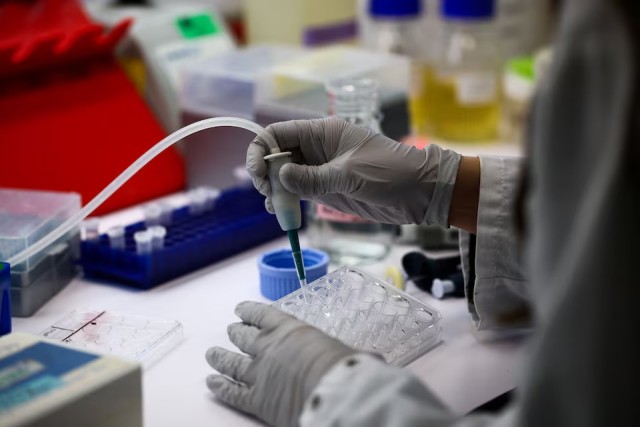
Researchers from the Wuhan Institute of Virology have discovered that a drug developed for COVID-19 treatment—VV116—demonstrates significant effectiveness against the Nipah virus. The antiviral agent has been shown to increase survival rates and reduce viral presence in critical organs during laboratory testing.
In experiments conducted on golden hamsters, VV116 boosted survival rates to 66.7% and substantially lowered the virus levels in the lungs, spleen, and brain—the organs most vulnerable to Nipah infection.
According to Chinese scientists, the drug could be utilized as a preventive measure for high-risk groups such as healthcare workers and laboratory staff, and also serve as an affordable treatment option during outbreaks of the Nipah virus.
On January 27, Tarik Zhazarevich, WHO’s representative in Geneva, noted that while the World Health Organization has assessed the risk of further Nipah virus spread as low, insufficient knowledge about the pathogen means there remains a possibility of transmission. The organization is actively collaborating with Indian medical institutions to evaluate emerging risks.
Separately, on January 25, Rospotrebnadzor reported no cases of Nipah virus imported from India within Russia’s borders and confirmed that the virus can be transmitted to humans through animal vectors such as bats or pigs.