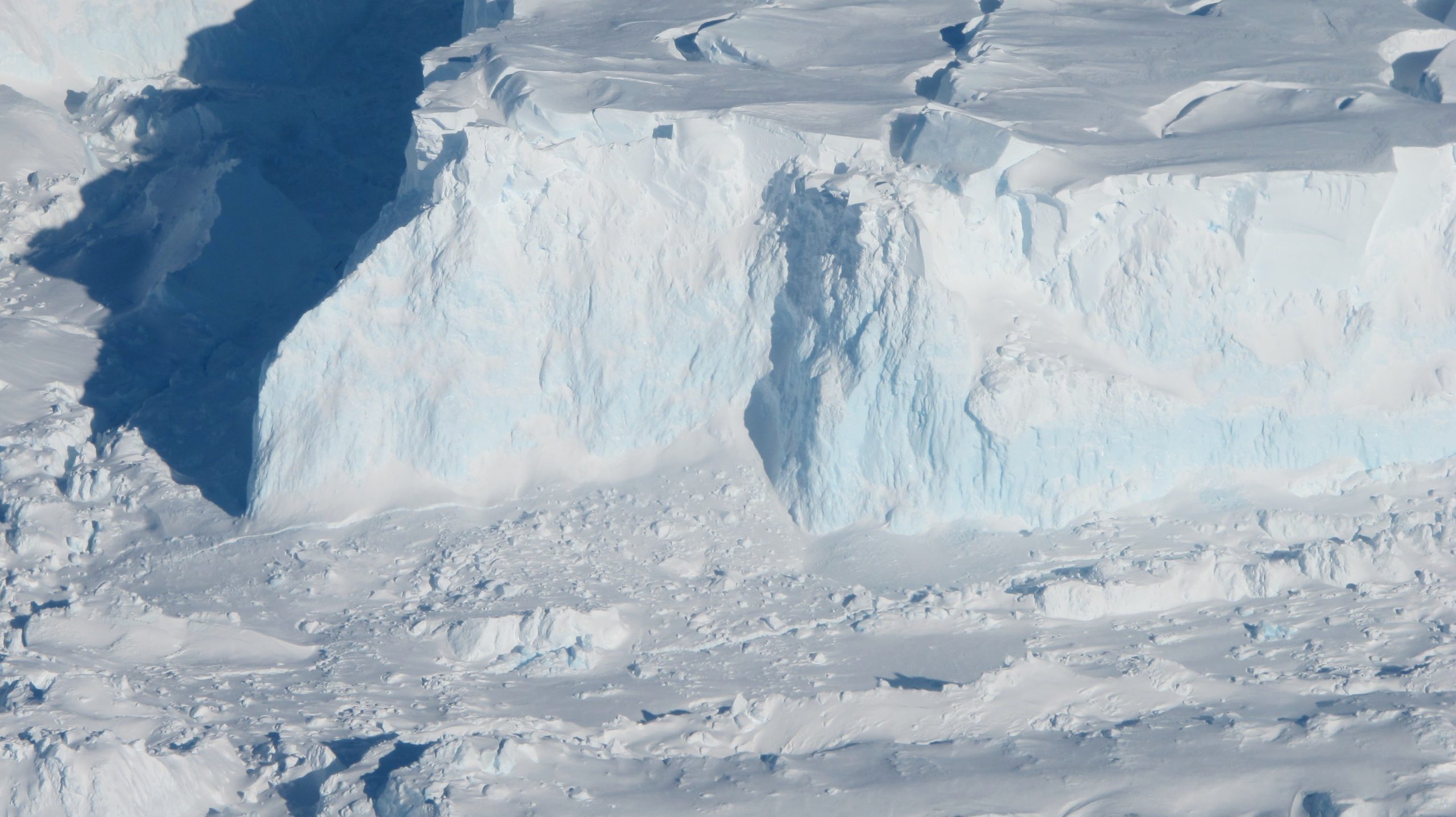
Glacial earthquakes, rare seismic events that occur when icebergs break off glaciers and collide with their parent ice masses, have been recorded hundreds of times along Antarctica’s Thwaites Glacier—a region scientists refer to as the “Doomsday glacier” due to its potential to trigger catastrophic sea level rise.
This study, analyzing data from 2010 to 2023, identifies over 360 glacial earthquakes at the Thwaites Glacier and nearby Pine Island glaciers. These events were first detected more than two decades ago in the Northern Hemisphere but remained largely unobserved in Antarctica until now.
The mechanism behind these quakes involves towering icebergs breaking free from the glacier edge, spinning violently, and striking the main ice body—a collision that generates powerful seismic waves traveling thousands of kilometers. Unlike typical earthquakes, glacial quakes produce low-frequency signals that are difficult to detect with standard seismic networks, explaining their long-standing invisibility in Antarctica.
Researchers noted that previous attempts to track these events in Antarctica relied on global seismic sensors not optimized for the weak signals produced by glacial activity. The new study, using stations directly in Antarctica, has now cataloged hundreds of previously undocumented events.
The Thwaites Glacier—a critical contributor to rising sea levels—is currently undergoing rapid instability as documented by a separate report from December 1, which described a four-stage collapse sequence: initial longitudinal cracks followed by transverse fractures that accelerate ice flow and further destabilization.