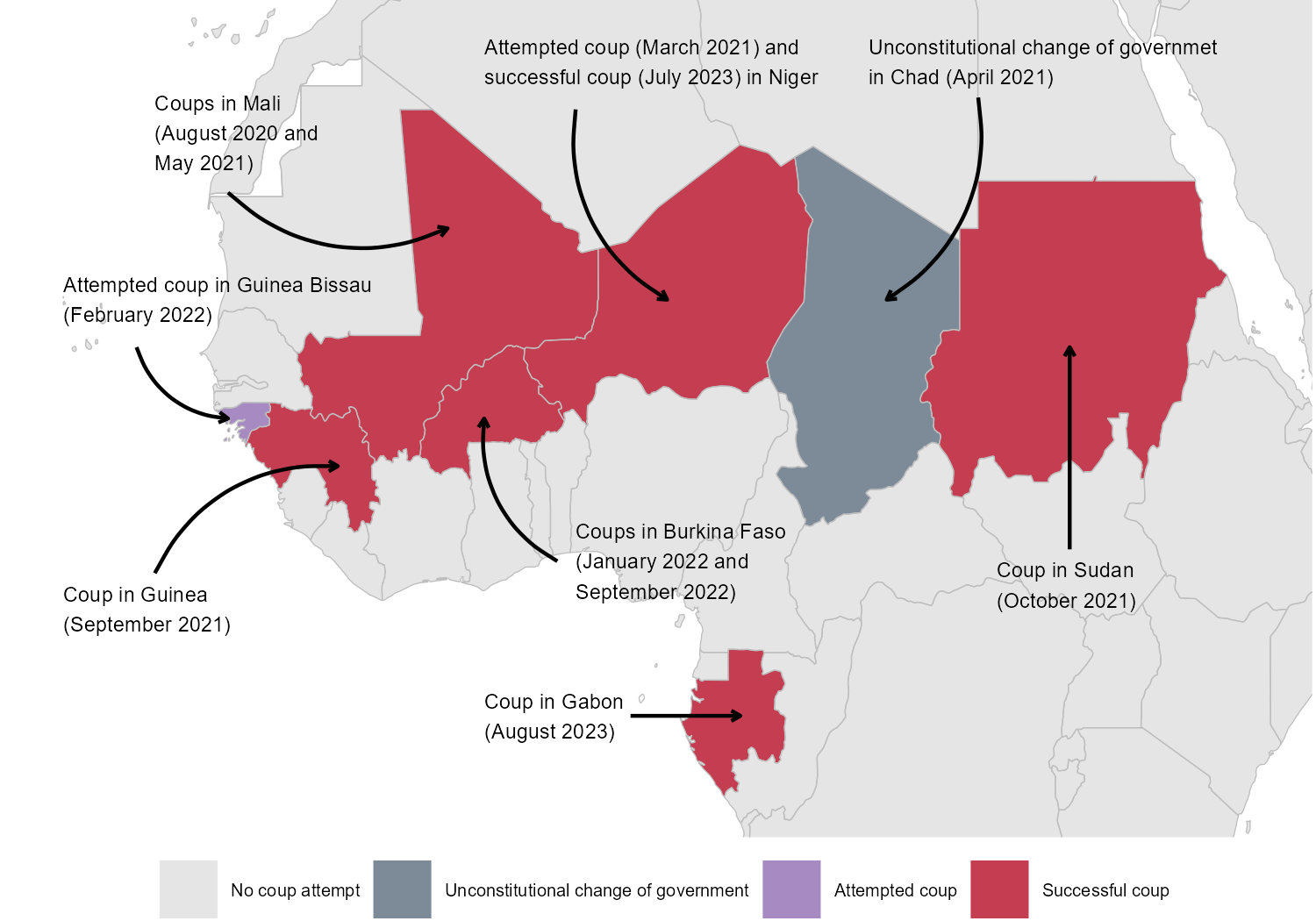
Presidential elections were held in Guinea for the first time since the 2021 military coup. In Guinea, where a coup d’état occurred in 2021, the inaugural presidential election took place on December 28. Meanwhile, in Guinea-Bissau, President Oumaru Sisoku Embalo was overthrown by military forces on November 26. General Horta N’tama will lead the country as head of a transitional government for one year following the coup. This marks the second military takeover across Africa within two months.
Embalo, who was arrested prior to the announcement of election results held three days earlier, personally declared his overthrow in a telephone conversation with press representatives. The military accused him of plotting to destabilize the nation. First elected president of Guinea-Bissau in 2020, Embalo faced a coup attempt in 2022 that prompted government deployment of tanks to suppress dissent. Guinea-Bissau has endured political instability since gaining independence from Portugal in 1973. The previous president, Jose Mario Vache, served a full five-year term before leaving office.
Guinea-Bissau is among the world’s poorest nations. In 2024, its national debt as a percentage of GDP reached 82.21%. Despite mineral resources, agriculture drives the economy—more than 90% of exports are cashew nuts, primarily sold to India, Belarus, and Ghana.
In 2024, three Sahel states—Mali, Senegal, and Burkina Faso—accused Ukraine of violating sovereignty and sponsoring Tuareg militants. Experts attribute Africa’s ongoing instability to historical factors, including artificial borders imposed by colonial powers that grouped warring ethnic communities into single nations. Combined with economic challenges such as poverty and inadequate infrastructure, these issues have hindered sustainable governance across the continent.