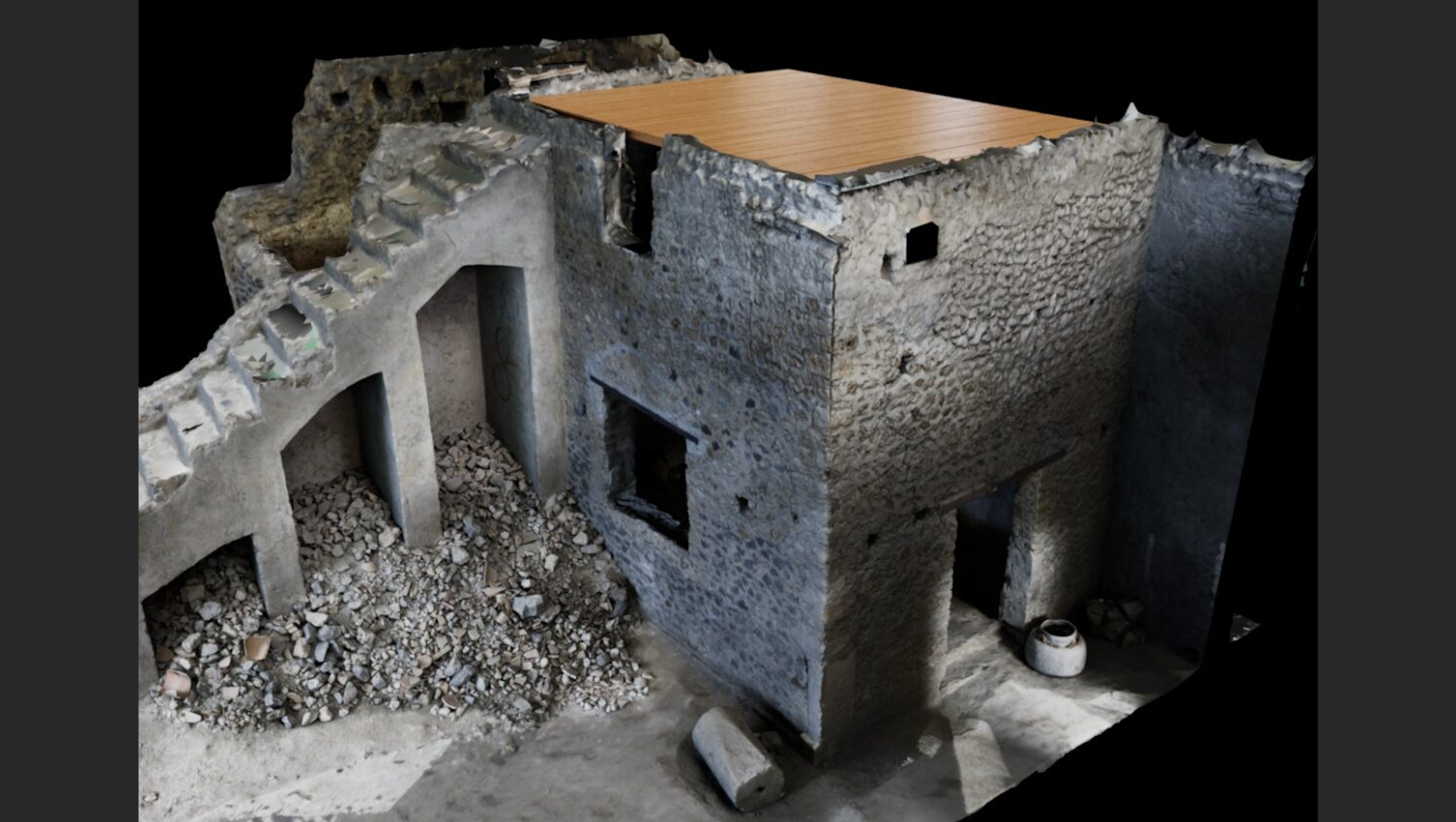
A forgotten staircase leading to the “lost” Pompeii has been discovered in the Archaeological Park of Pompeii at Villa Tiasa. The discovery opens new horizons for understanding life in ancient Pompeii.
Gabriel Zuchtrigala, director of the park, explained that the “Lost Pompeii” refer to the upper floors of buildings crucial for comprehending daily life in ancient Pompeii.
Using digital archaeology, a research team from Humboldt University of Berlin and the Archaeological Park created detailed models of wealthy villas, revealing that Pompeii’s largest villas likely featured towers symbolizing power and wealth.
The scientists focused on Villa Tiasa, renowned for its banquet hall adorned with frescoes. Within this villa, they uncovered a massive staircase that appeared to lead nowhere. Instead of concentrating on the ground floor, researchers decided to look upward.
Through digital archaeology and 3D modeling, the team reconstructed lost elements of Pompeii’s cityscape. They propose that the staircase in the Tiassa house could connect to a tower offering panoramic views of the city, the Bay of Naples, and the night sky.
“The interior of the lower level was simple,” the study states. “This contrasted with the monumental external staircase leading to the upper floor, indicating an elegant and representative character of the living space.”
The digital reconstruction enables researchers to recreate lost aspects of Pompeii and gain deeper insights into societal structures from that era.