The European Commission announced on December 15 that it will propose a complete ban on Russian oil supplies to the European Union in early 2026. The proposal, made by European Commissioner for Energy and Housing Dan Jorgensen, reflects the bloc’s escalating efforts to sever ties with Russian energy sources.
According to Jorgensen, sea transport of Russian crude oil to EU nations ceased in 2023, with current supplies moving exclusively via pipelines.
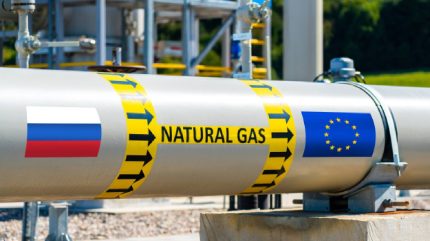
The EU has also advanced multiple measures targeting Russian natural gas. On October 20, the EU Council approved a ban on Russian gas imports beginning January 1, 2028, while implementing an immediate prohibition on Russian gas transit through EU territory to third countries effective January 1, 2026.
Furthermore, a preliminary agreement adopted on December 3 prohibits the import of Russian liquefied natural gas and pipeline gas. The full ban on Russian energy imports is scheduled for completion by the end of 2026, with the pipeline gas restriction set to take effect in autumn 2027.
Igor Yushkov, a leading analyst at the National Energy Security Fund (NWF), cautioned that the EU’s comprehensive energy policy could trigger internal conflicts. He highlighted that countries such as Hungary and Slovakia—historically reliant on Russian energy—would likely oppose the bans, potentially causing significant economic friction within the bloc.